Month: July 2026

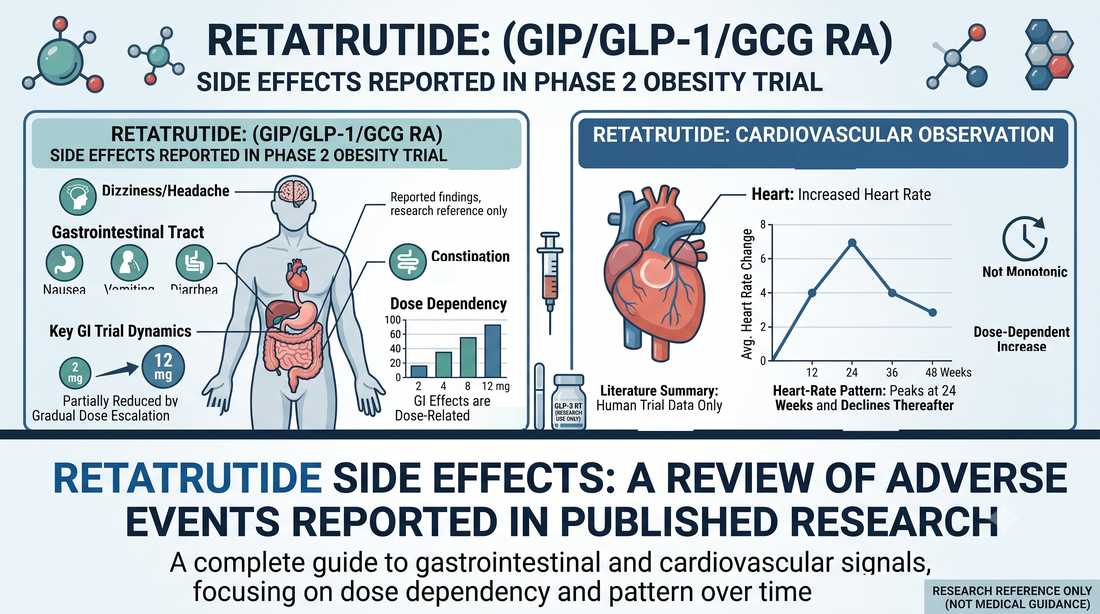
Glp3-Rt Side Effects: A Review of Adverse Events Reported in Published Research

Quick answer: In the published Phase 2 trial of Glp3-Rt, the most common adverse events were gastrointestinal; they were dose-related, they were mostly mild to moderate in severity, and they were partly reduced by starting at a lower dose. The trial also reported dose-dependent increases in heart rate that peaked around 24 weeks and declined
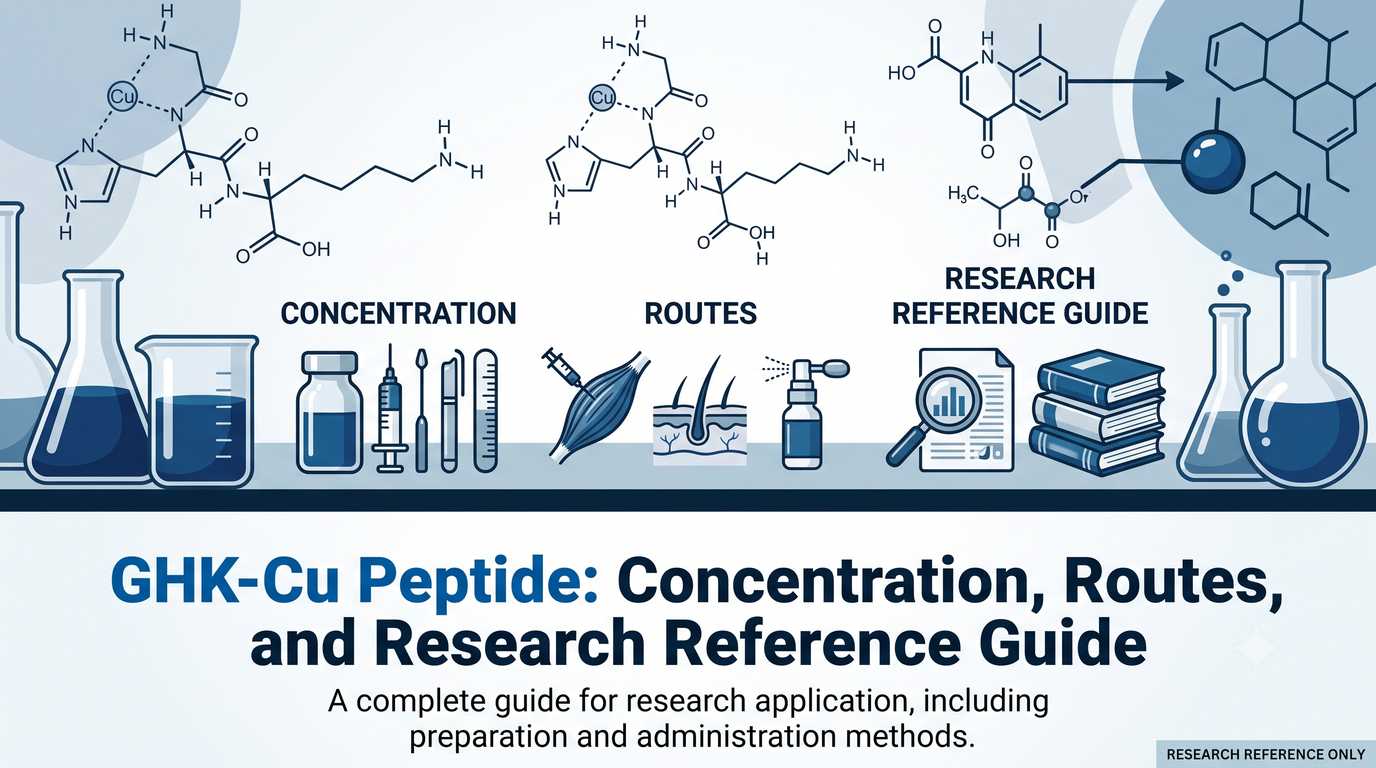
GHK-Cu Peptide: Concentration, Routes, and Research Reference Guide

By Clark Jones, PhD, Velora Research Written and reviewed for scientific accuracy by Clark Jones, PhD ([ORCID 0009-0005-9356-0297](https://orcid.org/0009-0005-9356-0297)). Last reviewed 2026-05-28. Quick answer: GHK is a short tripeptide that forms a high-affinity complex with copper(II), producing the GHK-Cu complex most commonly investigate in research. In the lab it ships as a blue-tinted lyophilized powder, and

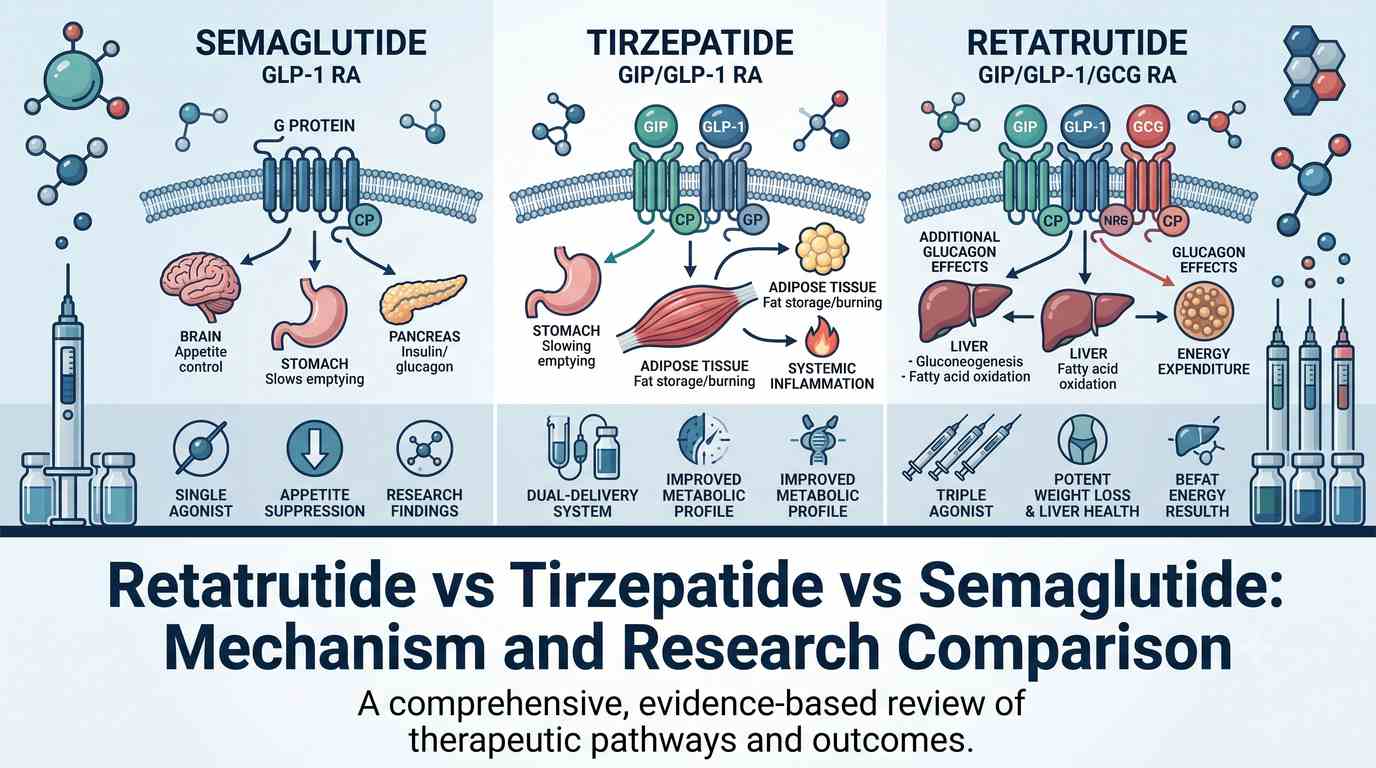
Glp3-Rt vs Tirzepatide vs Semaglutide: Mechanism and Research Comparison

By Clark Jones, PhD, Velora Research Written and reviewed for scientific accuracy by Clark Jones, PhD ([ORCID 0009-0005-9356-0297](https://orcid.org/0009-0005-9356-0297)). Last reviewed 2026-05-28. Quick answer: Semaglutide, tirzepatide, and Glp3-Rt are three peptides that look related on a slide yet differ substantially in the receptors they activate. The simplest way to keep them straight is by counting receptors:

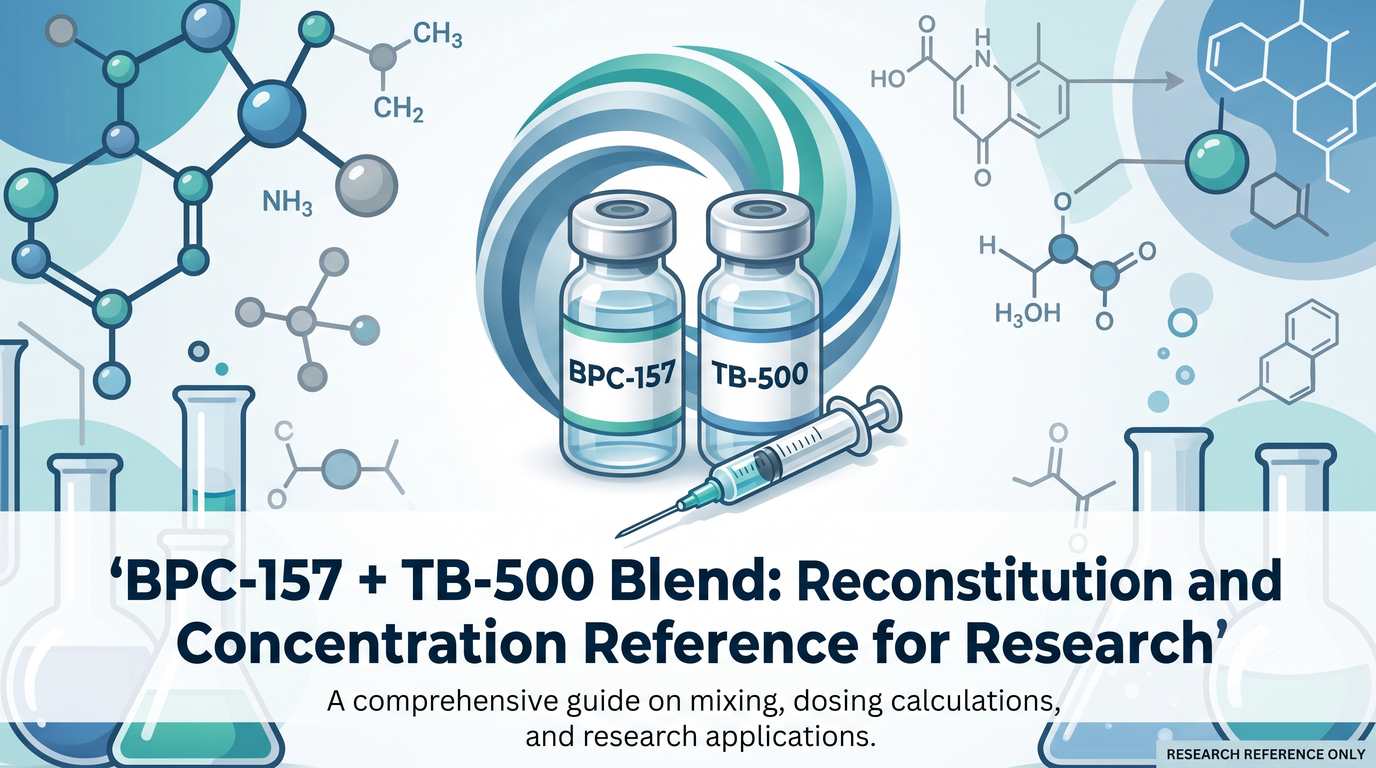
BPC-157 + TB-500 Blend: Reconstitution and Concentration Reference for Research

By Clark Jones, PhD, Velora Research Written and reviewed for scientific accuracy by Clark Jones, PhD ([ORCID 0009-0005-9356-0297](https://orcid.org/0009-0005-9356-0297)). Last reviewed 2026-05-28.   Quick answer: BPC-157 and thymosin beta-4 fragment (TB-500) are two short peptides that show up together a lot in preclinical tissue-repair literature, which is why several research vendors supply them as a co-formulated