

Description
About Melanotan 2 peptides (research compound)
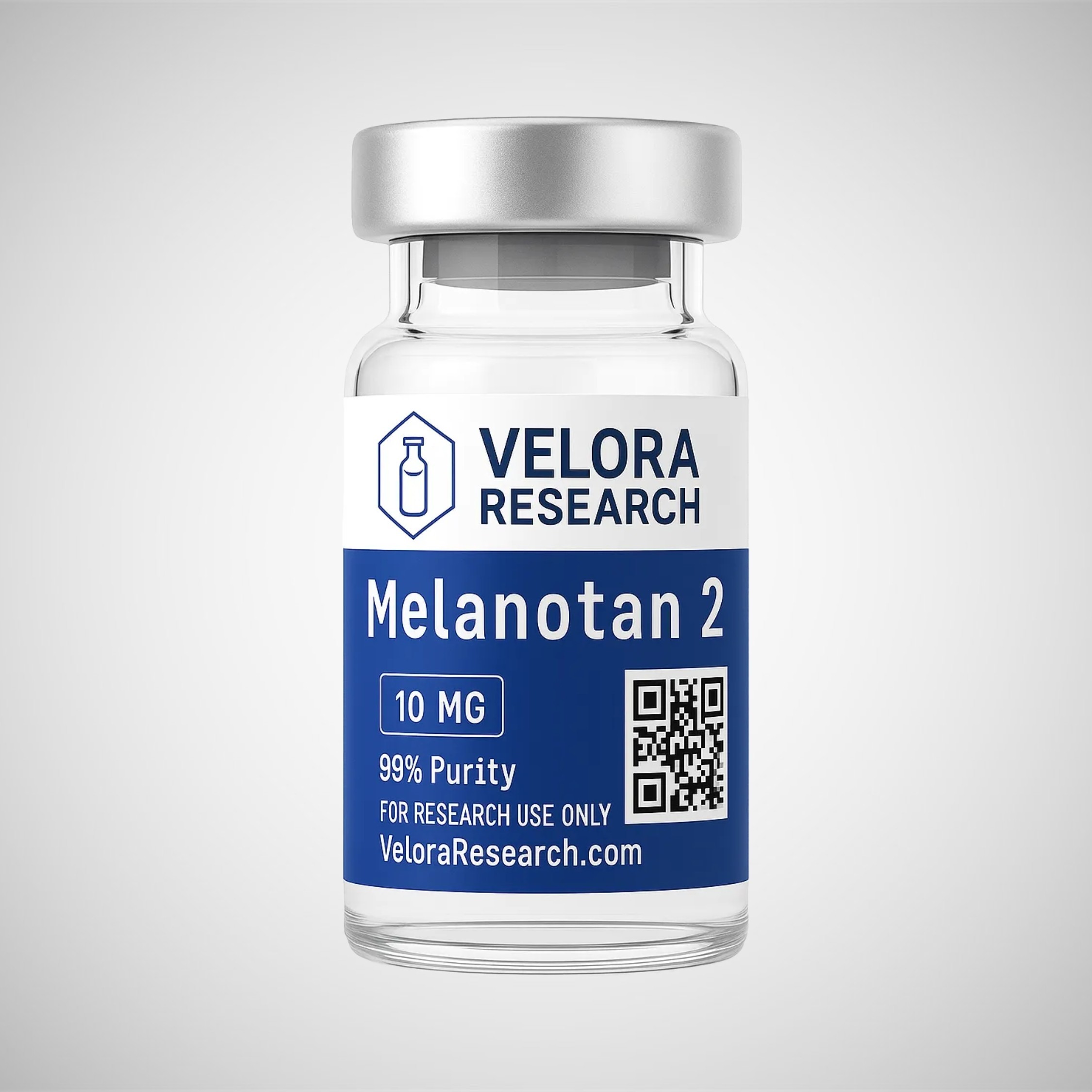
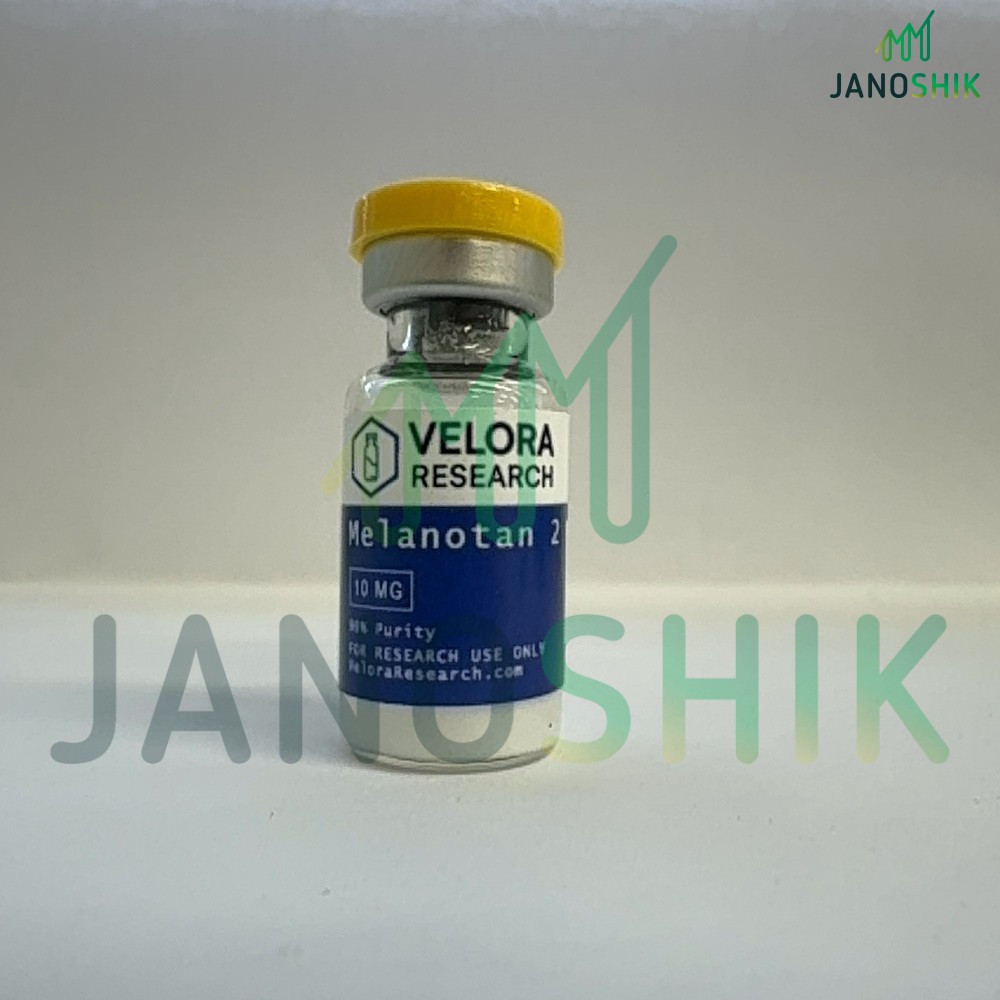
Melanotan 2 peptides, also known as MT-2 or Melanotan II, are synthetic cyclic seven-amino-acid analogs of alpha-melanocyte-stimulating hormone (alpha-MSH). Velora Research supplies the Melanotan 2 peptide as a 10mg lyophilized vial for in vitro and preclinical investigation by qualified laboratories and research professionals.
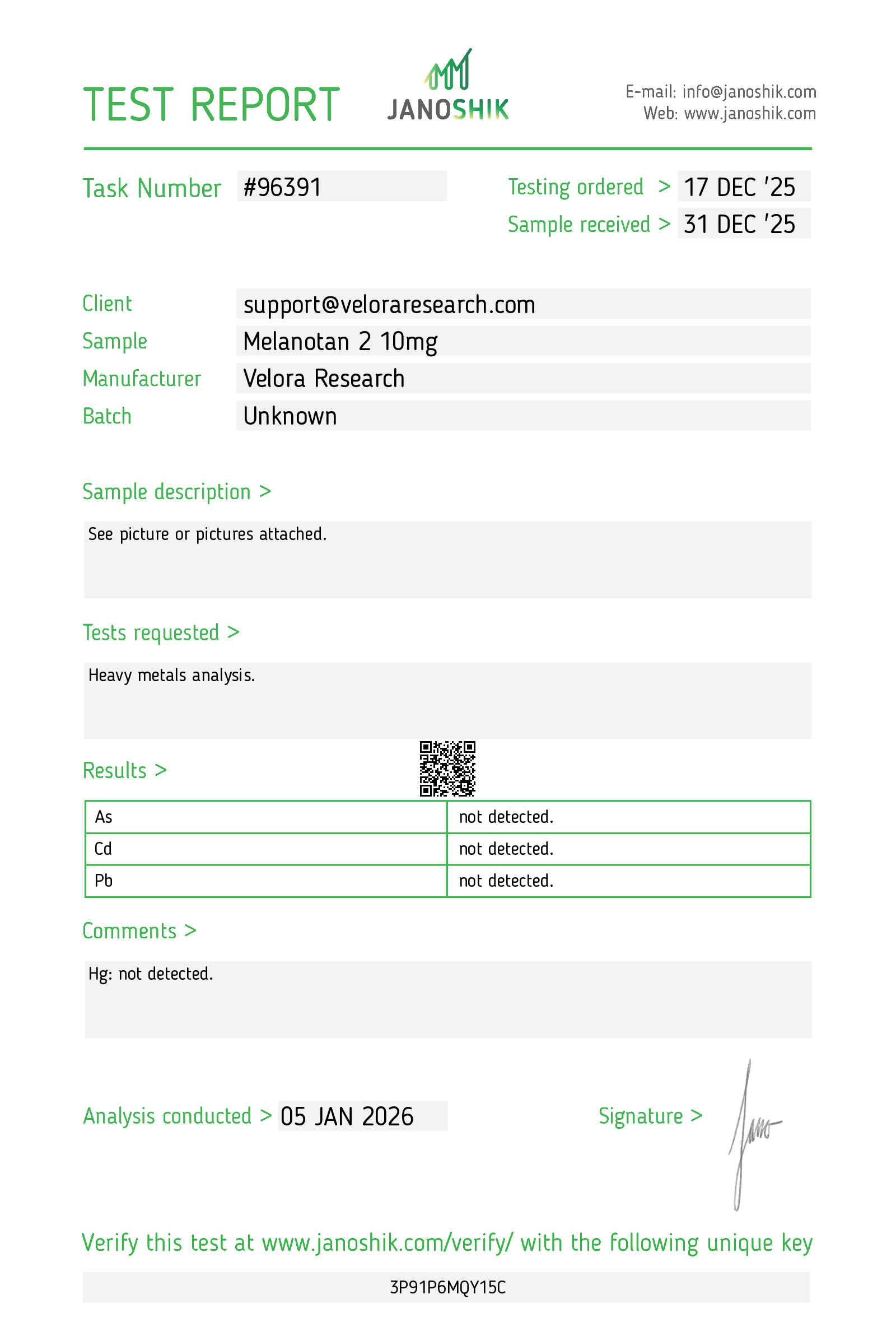
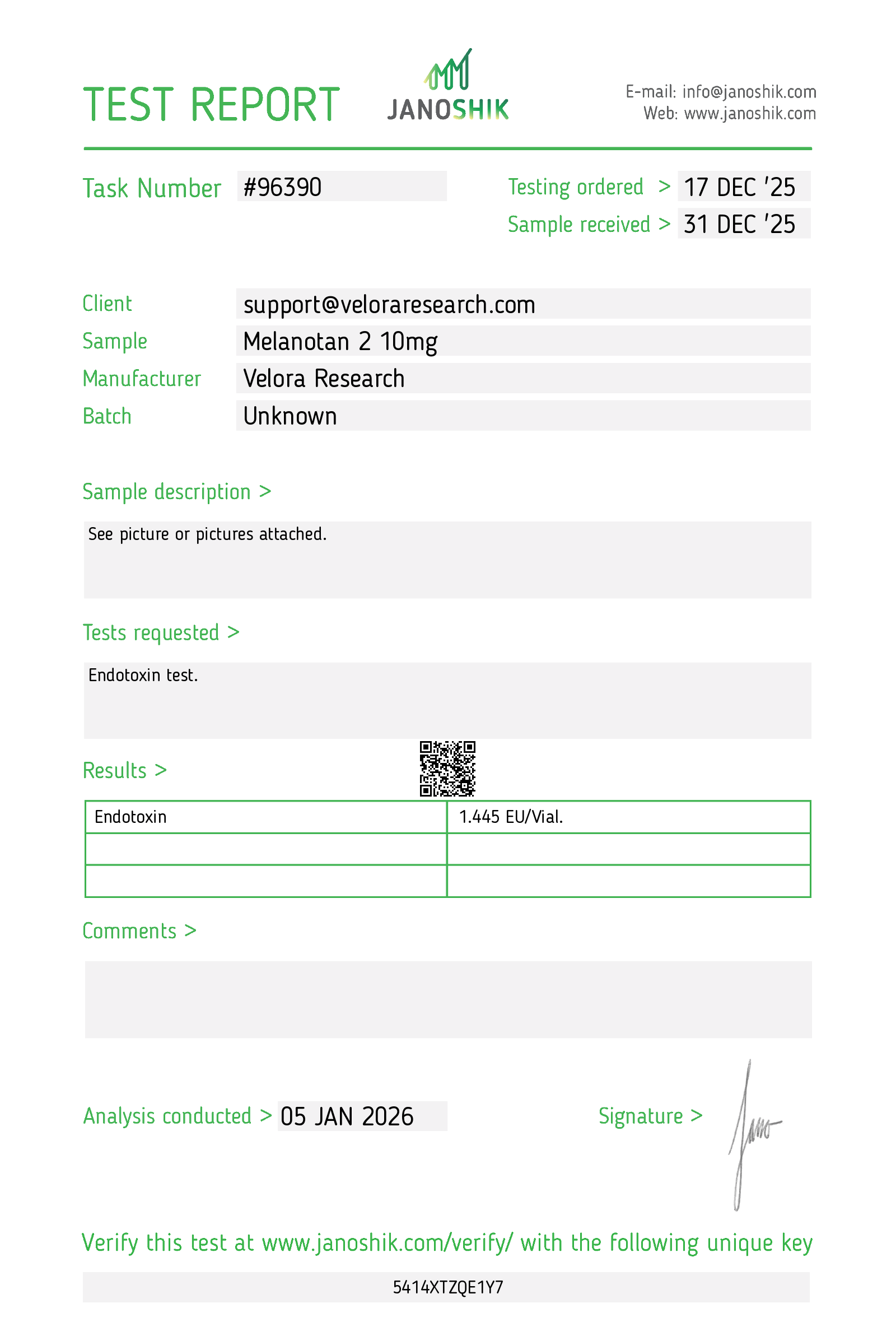
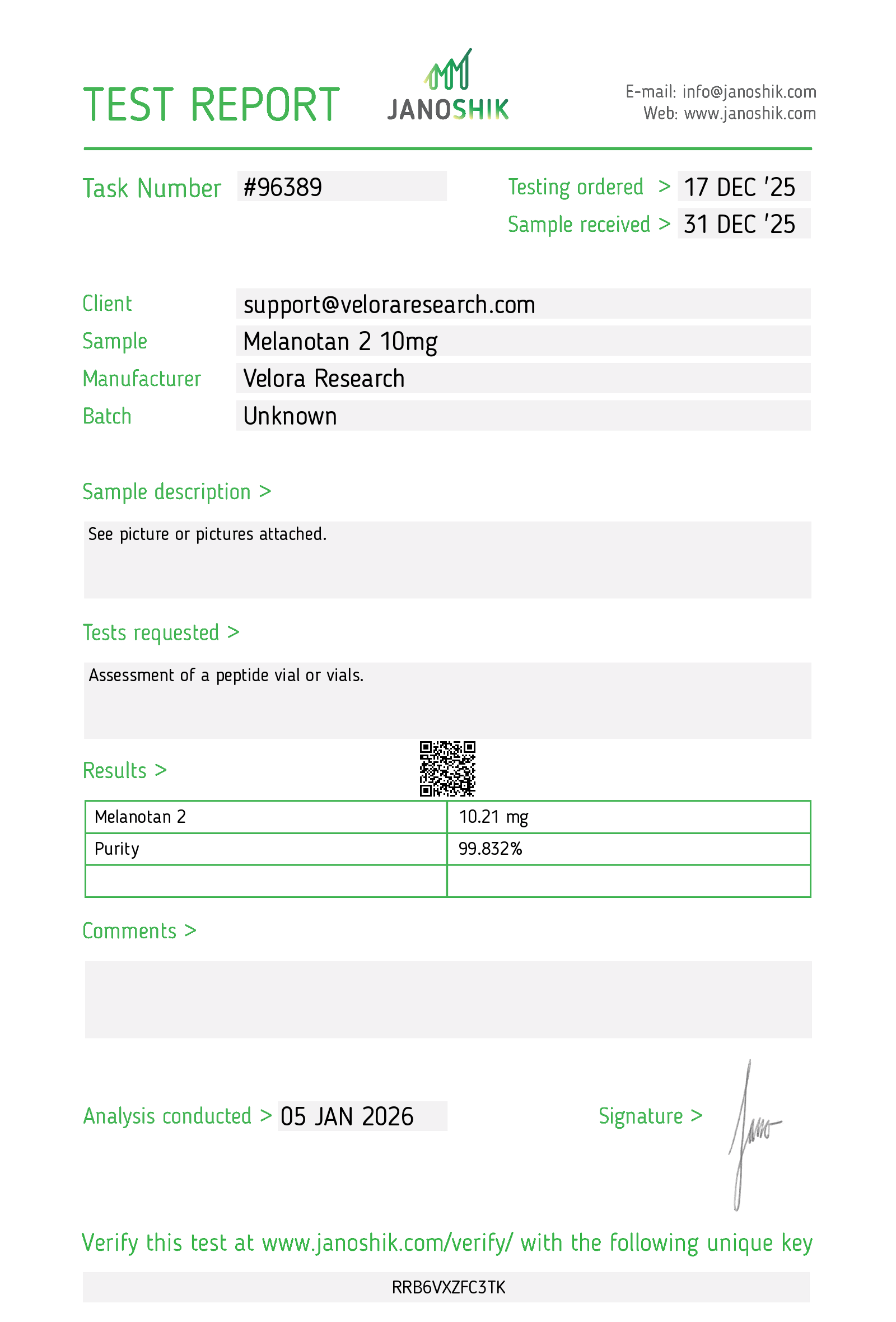
Every batch of Velora’s Melanotan 2 peptide is independently verified by a third-party analytical laboratory using high-performance liquid chromatography (HPLC) for purity and mass spectrometry for identity confirmation. The batch-specific Certificate of Analysis is published on our COAs page and linked from this product page so researchers can confirm identity, purity, and molecular integrity before placing the compound into a study.
What is MT2 peptide?
MT2 peptide (Melanotan 2) is a synthetic compound with the structure Ac-Nle-cyclo[Asp-His-D-Phe-Arg-Trp-Lys]-NH2. The compound is a cyclic heptapeptide derived from the alpha-MSH structural family. Three modifications distinguish MT-2 from native alpha-MSH: methionine at position 4 is replaced by norleucine (Nle), phenylalanine at position 7 is replaced by its D-isomer (D-Phe), and a cyclic structure is formed through a lactam bridge between aspartate at position 5 and lysine at position 10. These modifications produce a smaller, more potent compound that resists enzymatic degradation.
Melanotan 2 was developed in the 1980s at the University of Arizona alongside Melanotan 1 (afamelanotide). Unlike MT-1, which was developed into the FDA-approved pharmaceutical Scenesse by Clinuvel Pharmaceuticals, Melanotan 2 has never been approved by the FDA, the European Medicines Agency, or any other major regulator for any indication. It exists in published literature solely as a research compound.
Mechanism: what published research describes
Melanotan 2 has been extensively characterized in preclinical research as a broad-spectrum agonist of the melanocortin receptor family. Unlike Melanotan 1, which shows preferential binding for MC1R only, MT-2 binds across all five melanocortin receptors (MC1R, MC2R, MC3R, MC4R, MC5R) with varying affinities. This broader receptor profile is the principal mechanism distinction between the two compounds.
Published research areas where MT-2 has been characterized include:
- MC1R activation (melanogenesis pathway research). Cell-culture studies of melanocyte tyrosinase activation, MITF transcription factor expression, and eumelanin synthesis in response to MT-2.
- MC3R and MC4R activation (central melanocortin research). Animal-model studies of feeding behavior, energy expenditure, and sexual behavior pathways driven by MC3R and MC4R signaling.
- MC5R activation (peripheral melanocortin research). In-vitro studies of sebaceous gland and exocrine function pathways.
- Receptor-binding-affinity comparison studies. Published research comparing MT-2 receptor profiles against alpha-MSH, MT-1, and other melanocortin-family compounds.
All mechanisms above are drawn from peer-reviewed preclinical literature. Velora supplies the MT-2 peptide solely as a research compound. Nothing in this section constitutes a claim that the Velora product produces any specific outcome in humans, animals, or therapeutic applications.
Documented effects in published research (research-context only)
Because MT-2 binds the broader melanocortin receptor family beyond MC1R, published research has characterized a wider range of observed effects in animal models compared to MT-1. The areas documented in peer-reviewed literature include changes in feeding behavior (MC3R, MC4R), changes in sexual behavior (MC4R, observed in animal-model research), changes in pigmentation (MC1R), and changes in sebaceous gland function (MC5R).
Research literature has also documented adverse effects in animal models and historical human-use case reports, including nausea and flushing in early-phase historical studies, pigmentation changes including atypical mole development, and gastrointestinal effects. These are documented in published research literature and are not therapeutic claims. Velora Research provides this summary to support informed research design, not to suggest the compound is appropriate for any human use.
Key specifications
| Attribute | Specification |
| Research name | Melanotan 2 peptide |
| Alternate names | MT-2, MT2, Melanotan II |
| Class | Synthetic cyclic alpha-MSH analog |
| Sequence | Ac-Nle-cyclo[Asp-His-D-Phe-Arg-Trp-Lys]-NH2 |
| Sequence length | 7 amino acids (cyclic) |
| Available size | 10mg |
| Form | Lyophilized white powder |
| Purity | 99% or higher (HPLC verified) |
| Molecular formula | C50H69N15O9 |
| Molecular weight | ~1024.18 g/mol |
| CAS number | 121062-08-6 |
| Storage (lyophilized) | -20°C, sealed, dry, dark |
| Storage (reconstituted) | 2 to 8°C, single-use aliquots recommended |
| Verification | Independent third-party HPLC and mass spectrometry per batch |
| COA access | Batch-specific COA at verify.janoshik.com (linked from this page) |
Melanotan 2 peptides pricing
Velora Research lists the Melanotan 2 peptide 10mg at a single transparent tier:
| Vial size | Price (USD) | Best for |
| 10mg | $50.00 | Pilot studies, melanocortin receptor binding research, melanogenesis pathway research, MC3R through MC5R receptor-research models |
Free US shipping applies on orders over $200. Most orders process within 1 to 2 business days. International orders are accepted in accordance with applicable research regulations.
Buy Melanotan 2 online from Velora Research: why qualified researchers choose us
Researchers screening Melanotan 2 suppliers typically evaluate vendors on five criteria. Velora was built around all five:
- Batch-level third-party COA. Every lot of Melanotan 2 peptide is verified by an independent analytical lab using HPLC for purity and mass spectrometry for identity. The COA is downloadable from the product page and tied to the batch number printed on the vial.
- 99% or higher HPLC-verified purity. Identity, purity, and molecular integrity confirmed before any batch is released for sale.
- Documented production protocols. Lyophilized under controlled conditions, sealed in inert atmosphere, traceable from synthesis through shipment.
- US-based 2-day shipping. Free over $200; orders processed within 1 to 2 business days.
- Compliance-first sales policy. Sales restricted to qualified laboratories, institutions, and research professionals. Research-use-only terms acknowledged at checkout.
Reconstitution and storage guidance (research use)
Velora’s Melanotan 2 peptide ships as a lyophilized powder. For in vitro studies, researchers typically reconstitute with bacteriostatic water (0.9% benzyl alcohol) or, for cell-culture protocols, with sterile water at a concentration matched to the assay. A common pilot ratio for the 10mg vial is 1 mL of bacteriostatic water, yielding a 10 mg/mL stock solution, or 2 mL for a 5 mg/mL stock. Adjust per study design.
- Pre-reconstitution: store sealed at -20°C in a dry, dark environment. Avoid freeze-thaw cycles, which can degrade peptide integrity.
- Post-reconstitution: refrigerate at 2 to 8°C and use within the stability window established by the research protocol. Single-use aliquots reduce repeated exposure to room temperature.
- Handling: reconstitute and aliquot under sterile lab conditions with appropriate PPE.
Velora Research supplies bacteriostatic water as a separate product. Please refer to the peer-reviewed literature for protocol-specific reconstitution and handling parameters.
Melanotan 2 vs Melanotan 1: research-context comparison
Researchers selecting between Melanotan 1 and Melanotan 2 for a study typically weigh the receptor profile and the regulatory status. Summary of how the two differ at the molecular and functional level, drawn from published research:
| Attribute | Melanotan 2 | Melanotan 1 (afamelanotide) |
| Sequence length | 7 amino acids (cyclic) | 13 amino acids (linear) |
| Sequence | Ac-Nle-cyclo[Asp-His-D-Phe-Arg-Trp-Lys]-NH2 | Ac-Ser-Tyr-Ser-Nle-Glu-His-D-Phe-Arg-Trp-Gly-Lys-Pro-Val-NH2 |
| Molecular weight | ~1024 g/mol | ~1646 g/mol |
| Receptor selectivity | Broad binding across MC1R, MC2R, MC3R, MC4R, MC5R | Preferential MC1R binding |
| Functional profile in research | Broader melanocortin activity, wider documented effect profile in animal models | More targeted melanocortin-1 receptor activity in pigmentation pathway studies |
| FDA status | Not approved for any indication anywhere in the world | Approved as Scenesse for EPP (Clinuvel Pharmaceuticals, 2019) |
| Research literature focus | Pigmentation, appetite, sexual behavior, broader melanocortin pathways | Pigmentation and photoprotection (specifically EPP) |
Both peptides are supplied by Velora Research as research compounds for in vitro and preclinical investigation only. Researchers running comparative studies of the two compounds may consider purchasing both for direct head-to-head assay designs. The receptor-selectivity difference (broader for MT-2, narrower for MT-1) is the principal basis for selecting one over the other in a given research protocol.