Lab-Verified Research Peptides
Third-Party Tested & COA Verified
Free Shipping on Orders $200+

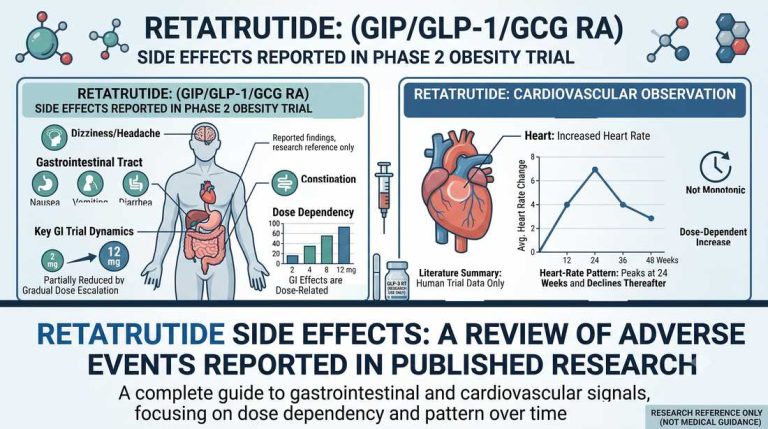
Glp3-Rt Side Effects: A Review of Adverse Events Reported in Published Research

Quick answer: In the published Phase 2 trial of Glp3-Rt, the most common adverse events were gastrointestinal; they were dose-related, they were mostly mild to moderate in severity, and they were partly reduced by starting at a lower dose. The trial also reported dose-dependent increases in heart rate that peaked around 24 weeks and declined […]
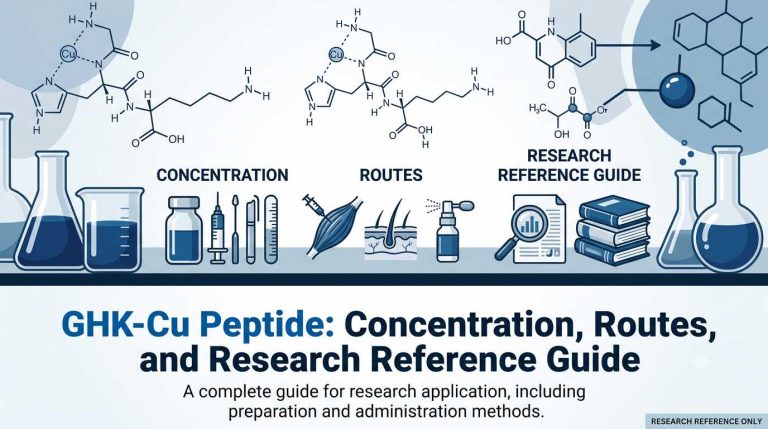
GHK-Cu Peptide: Concentration, Routes, and Research Reference Guide

By Clark Jones, PhD, Velora Research Written and reviewed for scientific accuracy by Clark Jones, PhD ([ORCID 0009-0005-9356-0297](https://orcid.org/0009-0005-9356-0297)). Last reviewed 2026-05-28. Quick answer: GHK is a short tripeptide that forms a high-affinity complex with copper(II), producing the GHK-Cu complex most commonly investigate in research. In the lab it ships as a blue-tinted lyophilized powder, and […]

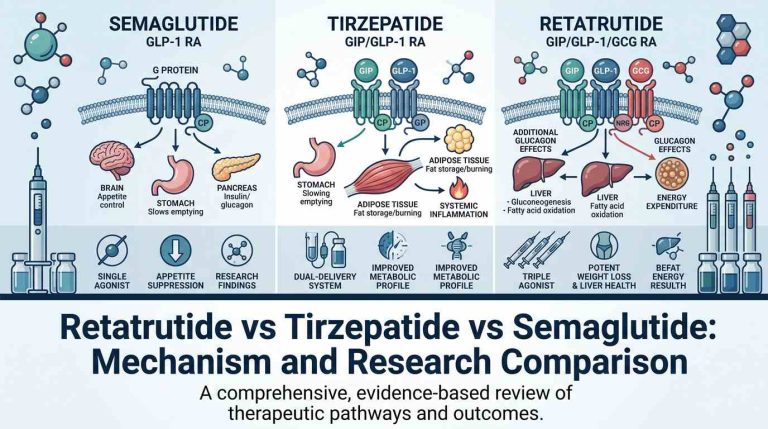
Glp3-Rt vs Tirzepatide vs Semaglutide: Mechanism and Research Comparison

By Clark Jones, PhD, Velora Research Written and reviewed for scientific accuracy by Clark Jones, PhD ([ORCID 0009-0005-9356-0297](https://orcid.org/0009-0005-9356-0297)). Last reviewed 2026-05-28. Quick answer: Semaglutide, tirzepatide, and Glp3-Rt are three peptides that look related on a slide yet differ substantially in the receptors they activate. The simplest way to keep them straight is by counting receptors: […]

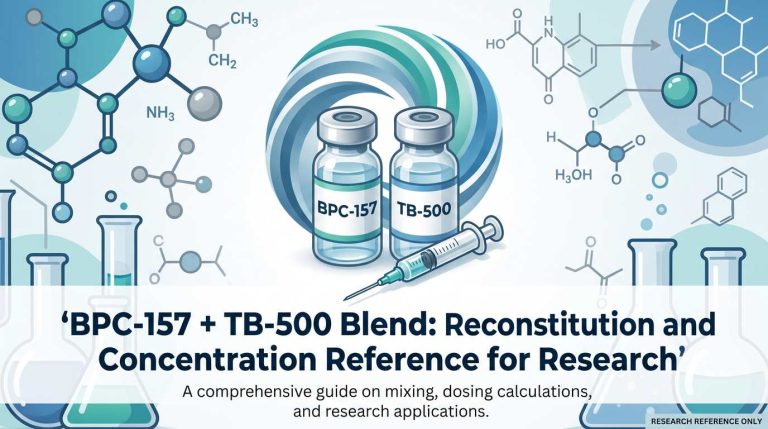
BPC-157 + TB-500 Blend: Reconstitution and Concentration Reference for Research

By Clark Jones, PhD, Velora Research Written and reviewed for scientific accuracy by Clark Jones, PhD ([ORCID 0009-0005-9356-0297](https://orcid.org/0009-0005-9356-0297)). Last reviewed 2026-05-28.   Quick answer: BPC-157 and thymosin beta-4 fragment (TB-500) are two short peptides that show up together a lot in preclinical tissue-repair literature, which is why several research vendors supply them as a co-formulated […]

blog-4

Ensuring Reproducibility in Scientific Research: The Role of Verified Materials

Reproducibility is one of the most important principles in scientific research. For results to be credible, experiments must be repeatable under the same conditions and produce consistent outcomes. While methodology and data analysis are critical, the quality and verification of research materials play an equally important role in achieving reproducible results. In laboratory research, especially […]

blog-2

Why Third-Party Testing and Certificates of Analysis Matter in Peptide Research

In laboratory research, the reliability of experimental results depends heavily on the quality and consistency of the materials used. When working with research peptides, even small variations in purity or composition can impact data accuracy and reproducibility. This is why third-party testing and Certificates of Analysis (COAs) play a critical role in responsible peptide research. […]

blog-3

Understanding Research Peptides: Applications, Standards, and Responsible Use

Research peptides play an important role in modern scientific investigation, supporting studies across biology, chemistry, and related laboratory disciplines. As interest in peptide-based research continues to grow, it is essential for laboratories and qualified professionals to understand what research peptides are, how they are used, and why quality standards and responsible handling matter. This article […]

1 2 3 4
Your Cart
Spend $200 For a Free Shippings

No products in the cart.

/* ===== MOBILE MENU TOGGLE SCRIPT ===== */