veloraresearch.com

Buying Research Peptides Online: 7 Vendor Criteria and a Vetting Checklist

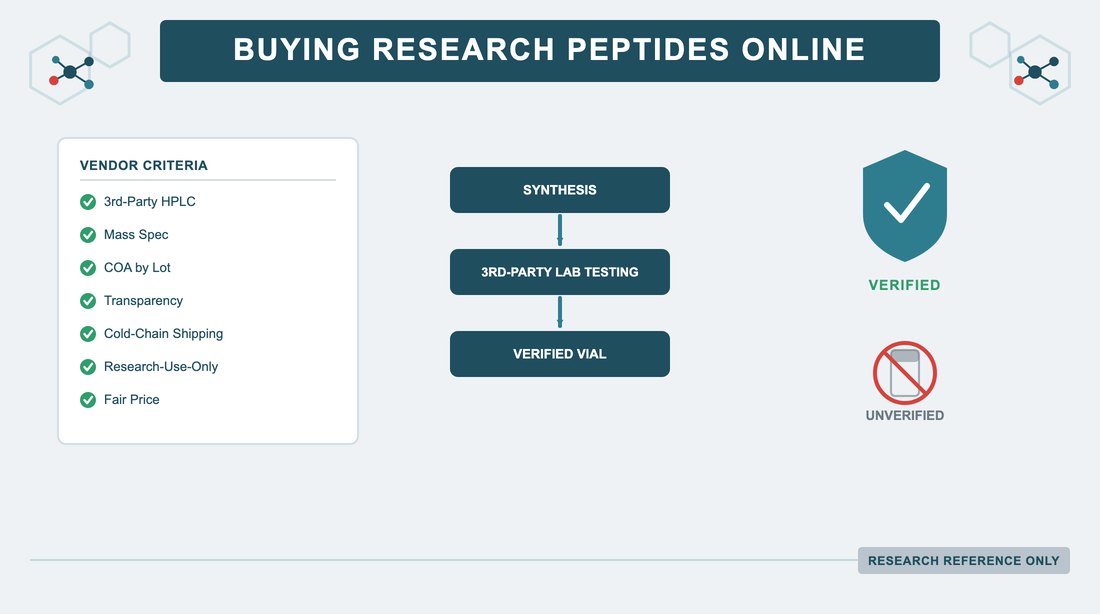
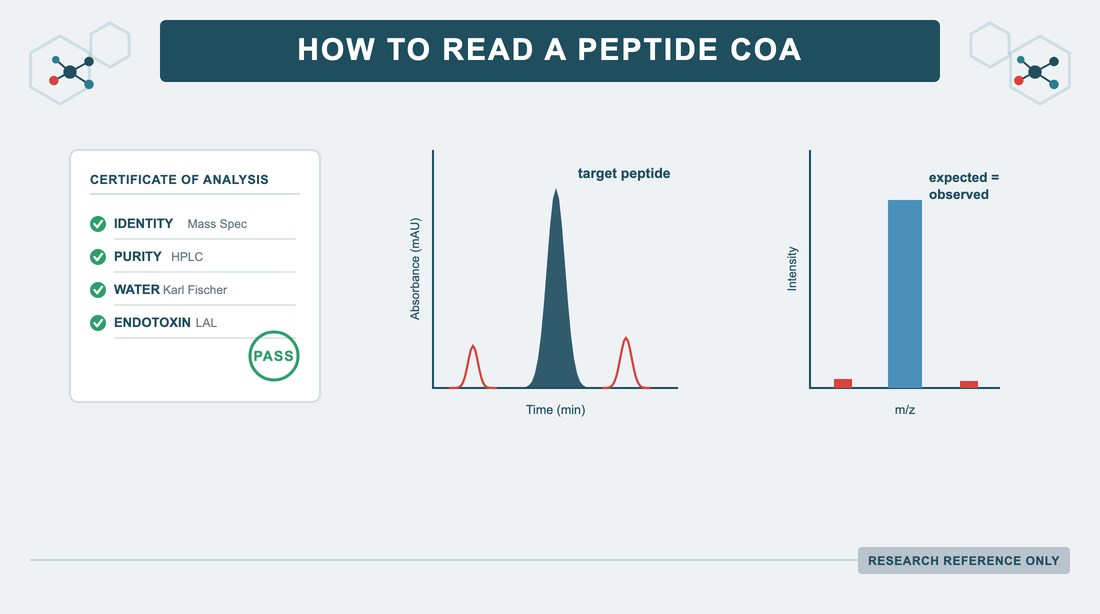
Quick answer: When you buy research peptides online, the vendor’s analytical rigor matters more than the price. Look for third-party HPLC and mass-spec testing on every batch, Certificates of Analysis you can access by lot number, transparent testing and compliance language, and reasonable pricing that reflects verification rather than a race to the bottom. The
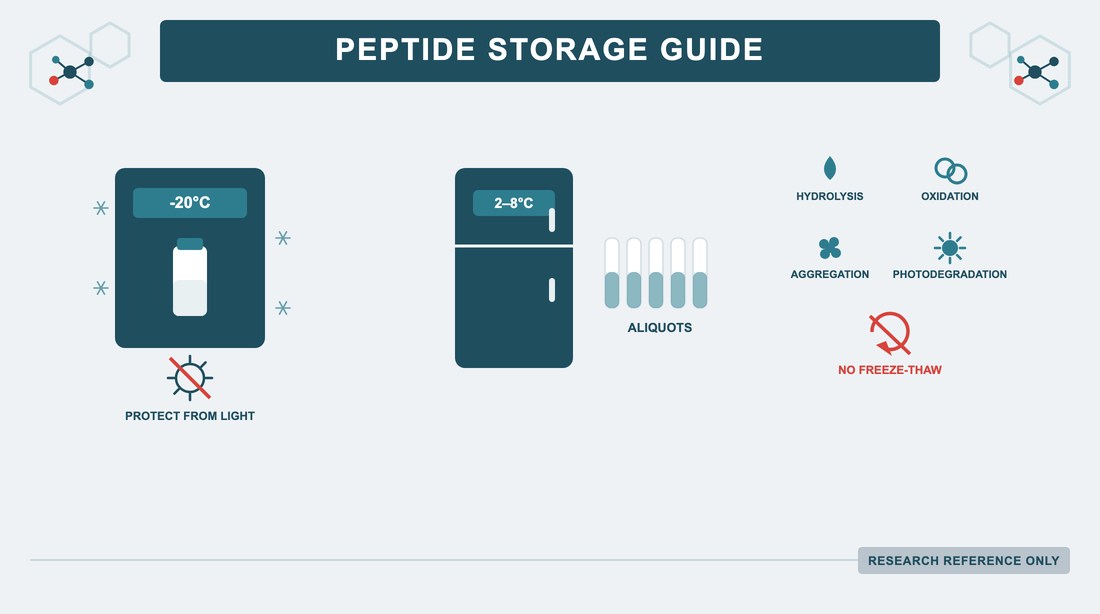
Peptide Storage Guide Temperature, Light, and Stability for Research Compounds

Quick answer: Store lyophilized peptides sealed at -20°C, protected from light. Once reconstituted, keep the working stock at 2 to 8°C, still protected from light, and avoid repeated freeze-thaw cycles by working in single-use aliquots. Some peptide classes have extra sensitivities worth knowing: copper complexes like GHK-Cu are photochemically active, and any peptide’s specific usable

CJC-1295 No DAC + Ipamorelin: Co-Administration Mechanism and Research Reference

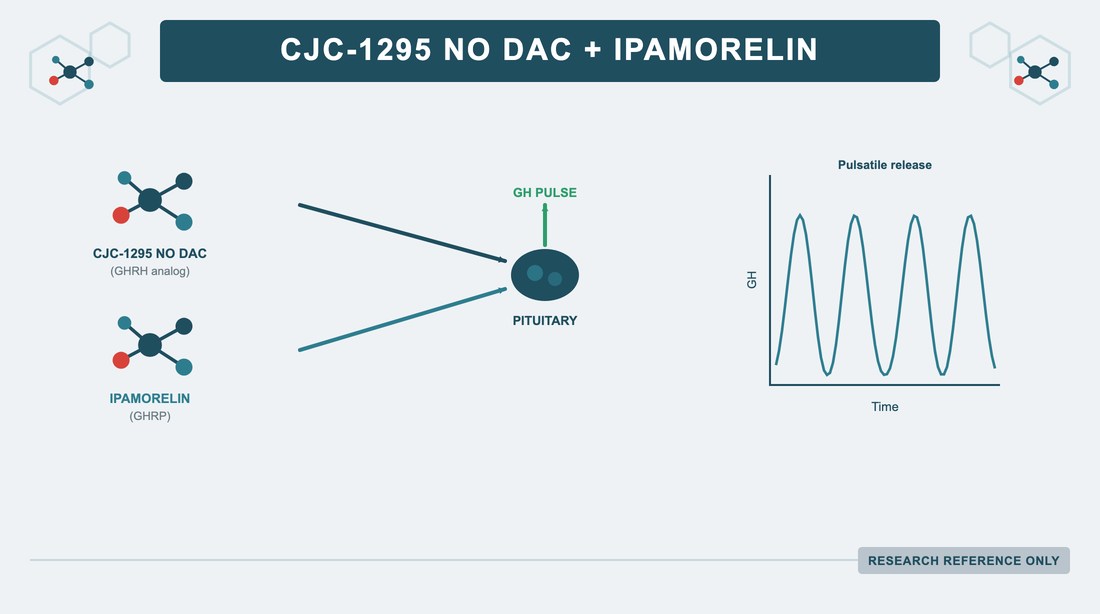
Quick answer: CJC-1295 No DAC and ipamorelin are two growth-hormone-axis research peptides that act on different receptors, which is why they are often studied together. CJC-1295 No DAC (also called Modified GRF 1-29) is a stabilized GHRH analog with a relatively short functional half-life of roughly 30 minutes. Ipamorelin is a selective ghrelin-receptor agonist. Neither

Glp3-Rt Side Effects: A Review of Adverse Events Reported in Published Research

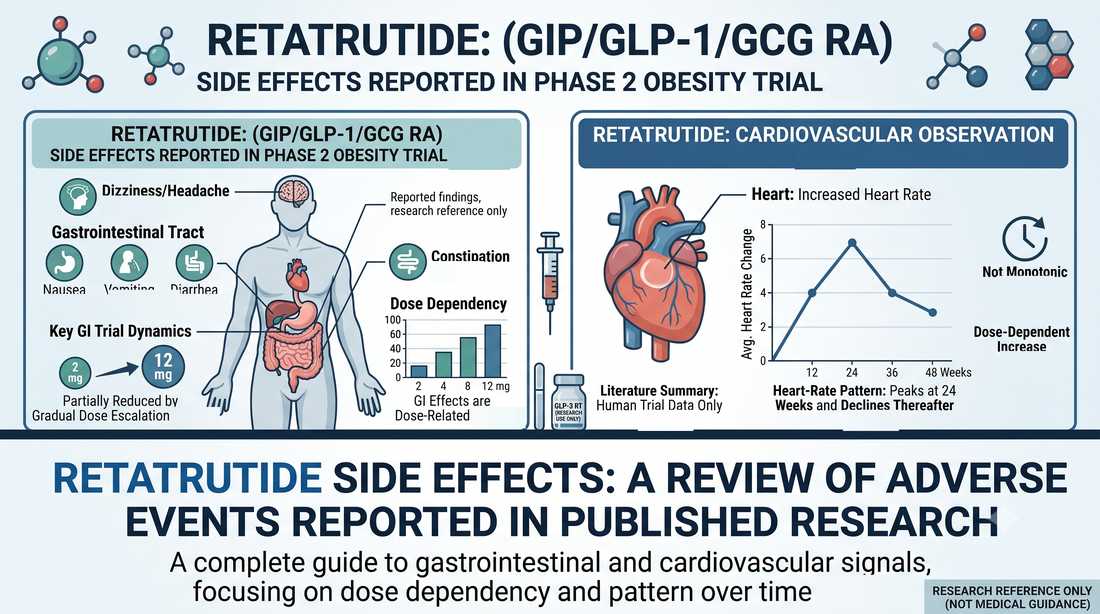
Quick answer: In the published Phase 2 trial of Glp3-Rt, the most common adverse events were gastrointestinal; they were dose-related, they were mostly mild to moderate in severity, and they were partly reduced by starting at a lower dose. The trial also reported dose-dependent increases in heart rate that peaked around 24 weeks and declined

GHK-Cu Peptide: Concentration, Routes, and Research Reference Guide

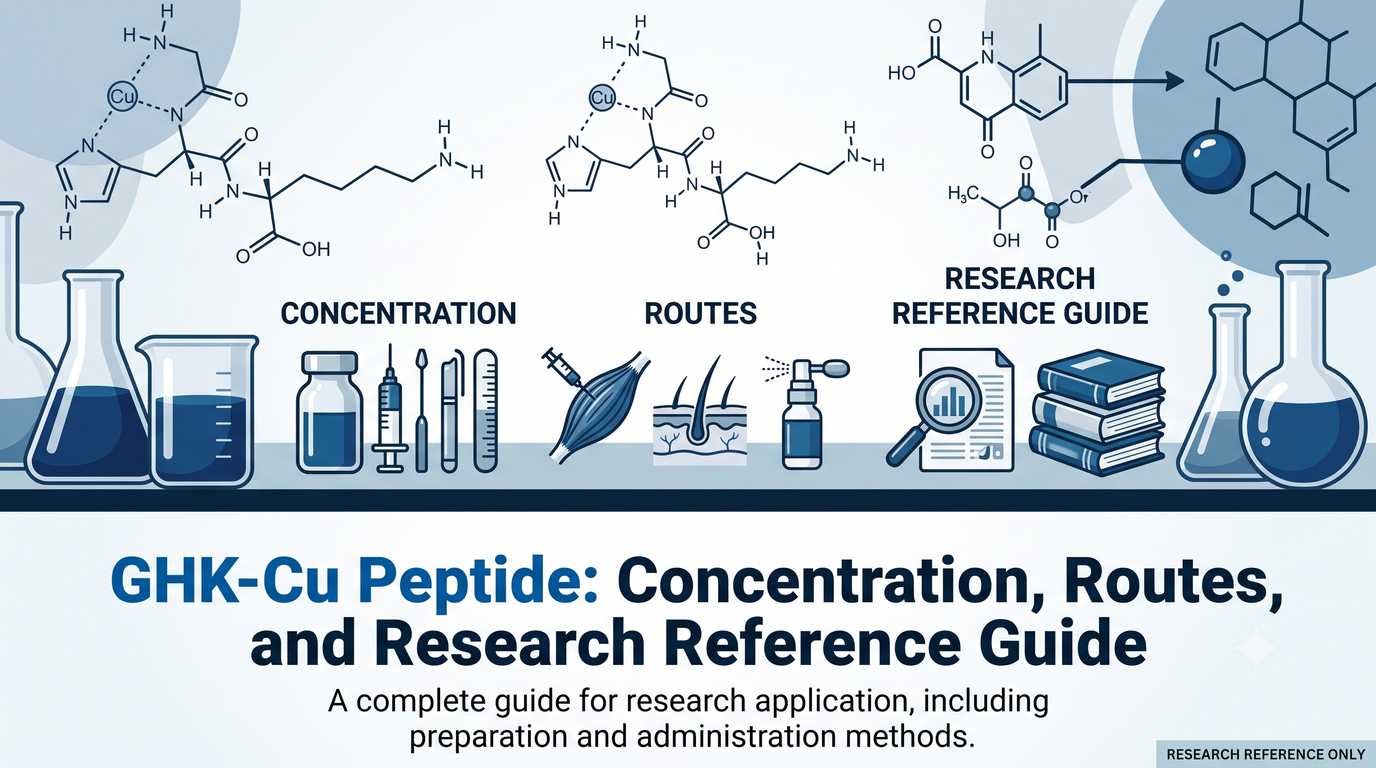
By Clark Jones, PhD, Velora Research Written and reviewed for scientific accuracy by Clark Jones, PhD ([ORCID 0009-0005-9356-0297](https://orcid.org/0009-0005-9356-0297)). Last reviewed 2026-05-28. Quick answer: GHK is a short tripeptide that forms a high-affinity complex with copper(II), producing the GHK-Cu complex most commonly investigate in research. In the lab it ships as a blue-tinted lyophilized powder, and